How to Judge Used Textbook Condition Before You Buy Online
If you’re buying a used textbook online, the safest move is simple: buy the cheapest copy that is complete, readable, correct for your class, and returnable. A book in Good or even Acceptable/Fair condition can be totally fine if the pages are intact and the text is legible. But if the listing hides water damage, missing pages, or the wrong edition, the bargain is fake.
That’s why the real question is not “What does the label say?” It’s “Will this copy actually work for the class?” Before you click buy, verify the ISBN on Textbook Nova or compare your options by ISBN and title, then use the seller’s condition notes to judge the copy itself. If you’re building a bigger semester plan, the broader textbook savings checklist helps you decide when used is the right play and when renting or buying new makes more sense.
Quick answer: what to buy
| Label | Usually means | Buy when |
|---|---|---|
| Like New / Very Good | Light cosmetic wear | You want the safest copy or a nicer gift |
| Good | Clearly used but readable and complete | You want the best value |
| Acceptable / Fair | Heavier wear or seller-specific grading | The pages are intact and the price gap is real |
| Avoid | Missing pages, water damage, unreadable text | Never |
- Best value for most students: Good condition if the book is complete and the seller is clear.
- Worth paying more for: Like New or Very Good when the class is technical, annotation-heavy, or hard to replace.
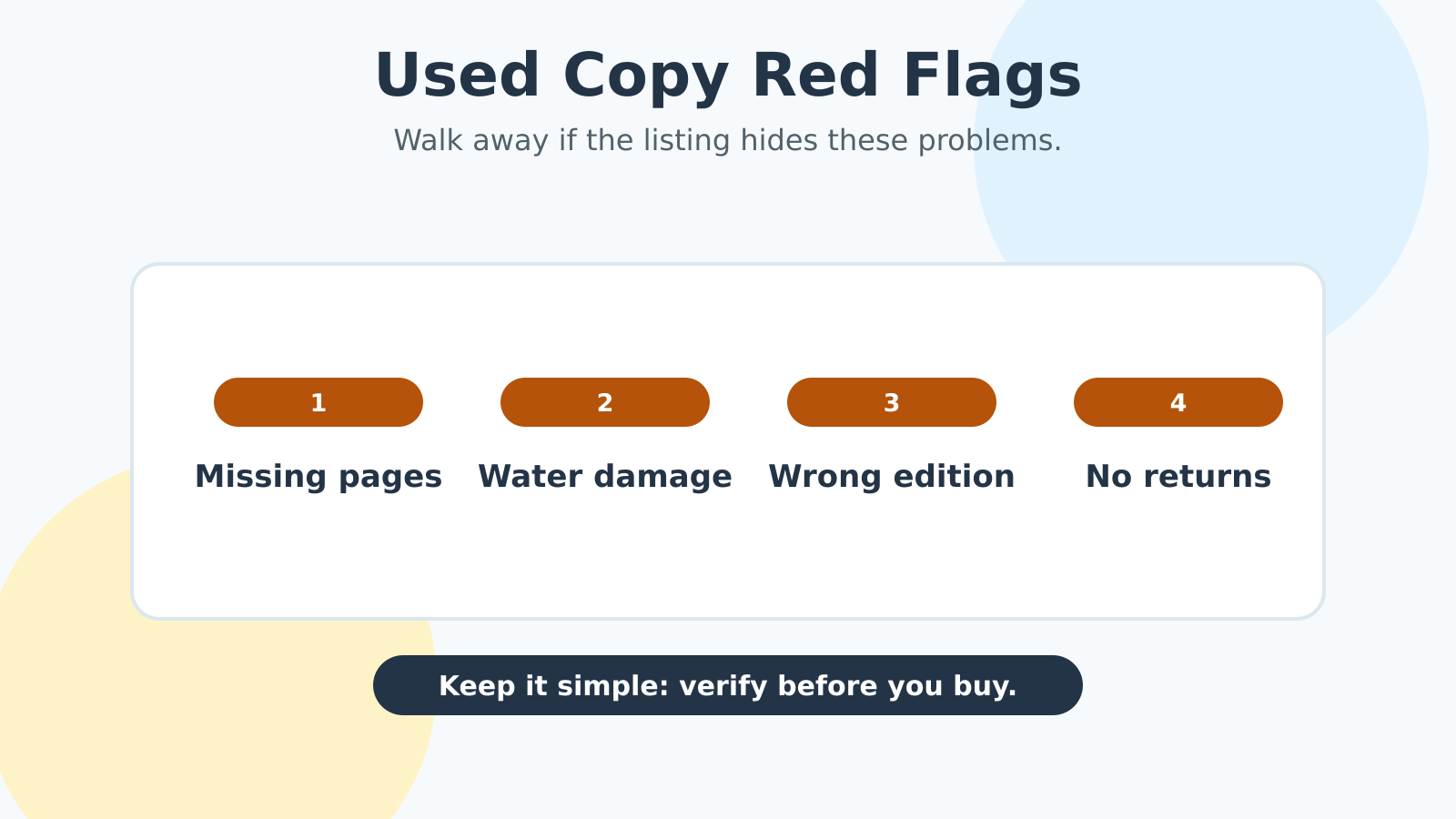
- Walk away fast: Missing pages, unreadable text, mold, bad water damage, or the wrong edition.
Amazon’s book condition guidelines are a useful shorthand because they draw a bright line between books that are still readable and books that are not. AbeBooks’ used-book condition guide adds the other big lesson: read the full seller description, not just the grade.
What used textbook condition labels usually mean
Most marketplaces use condition labels as shorthand for wear, not as a guarantee of classroom usability. The label tells you roughly how beat-up the book is. The listing description tells you whether the book will actually work for your class.
Like New / Very Good
These are the safest used copies. A Like New book should look almost untouched, with only tiny cosmetic wear at most. Very Good usually means a little more wear, but the book is still in strong shape. Amazon’s book condition guidelines treat Very Good as a near-new book with room for minor wear, while HPB’s condition guide describes Fine/Like New and Very Good as copies that are still in very good shape for reading.
For students, these are worth paying extra for when the class is annotation-heavy, the textbook has complex diagrams, or you know you will resell it later. You are paying for peace of mind, not just a prettier cover.
Good
Good is usually the sweet spot for budget buyers. It often means a textbook that is clearly used but still complete and readable. HPB’s condition guide describes Good copies as average used books with all pages present, and Biblio’s book condition guide says a Good book is typically a reading copy with the full text still available.
This is often the best value if the book is a reading text, a humanities book, or a class where light wear will not matter much.
Acceptable or Fair
This is where you need to read carefully. Amazon’s book condition guidelines allow Acceptable copies to have heavier wear, including minor water damage that does not hurt readability. Biblio notes that “Acceptable” is not a standard traditional grade and can mean different things from seller to seller, which is exactly why the listing description matters. HPB’s condition guide is even blunter: Fair books may be very worn, torn, or barely holding together.
Acceptable can still be fine for a class if the text is clear and the price drop is real. It is a lot less fine if you need a book that will survive a whole semester of regular use.
The five flaws that matter most for students
A scraped cover is annoying. A broken textbook is expensive. Focus on the damage that affects whether you can actually use the book.
Missing pages, obscured text, and weak bindings
These are hard-stop issues. Amazon’s book condition guidelines treat missing pages, obscured text, and unreadable text as unacceptable. TextbookRush’s condition and edition notes also make clear that books with missing pages or obscured text are not okay, and HPB’s condition guide notes that books in poor shape may be missing parts or barely holding together.
If the binding is weak, ask yourself one question: will this survive being opened every day for 15 weeks? If not, skip it.
Highlighting, notes, water damage, and odors
This is where student judgment matters. Light highlighting is often harmless. Heavy highlighting can be miserable if the class depends on precise reading. Amazon’s book condition guidelines allow some wear and tear in the lower grades, while HPB’s condition guide shows that used copies can include highlighting, library markings, or other wear and still be sold as reading copies.
Water damage is trickier than it looks. A little waviness may be okay; staining, mold, or pages stuck together is not. TextbookRush’s condition and edition notes and buying FAQ make supplements and edition checking important, and HPB’s guide makes clear that moisture damage can push a book into much worse territory. If a listing mentions odor, mildew, or smoke, walk away unless the price is almost giveaway-level and the seller has a strong return policy.
Do not confuse physical condition with textbook usability
A textbook can be physically rough and still academically fine. It can also look clean and still be useless.
The first thing to verify is the exact edition and ISBN. TextbookRush’s buying FAQ tells buyers to verify author, title, edition, and ISBN so they get the correct version. Some courses use nearly identical covers with different problem sets, page numbers, or chapter order.
The second thing is supplements. Used textbooks may not come with CDs, workbooks, online access codes, or other extras. HPB’s condition guide says used textbooks do not come with supplemental materials, and TextbookRush says the only way to guarantee supplements is to buy a brand-new US student edition that includes them. If your professor requires an access code, a cheap used copy may be the most expensive mistake you make all semester.
The third thing is the seller’s return policy. TextbookRush’s buying FAQ recommends checking return information before buying marketplace books. That kind of buffer matters if the listing photos are vague or the condition grading feels optimistic.
A pre-buy checklist for online used textbook listings
Use this before you buy:
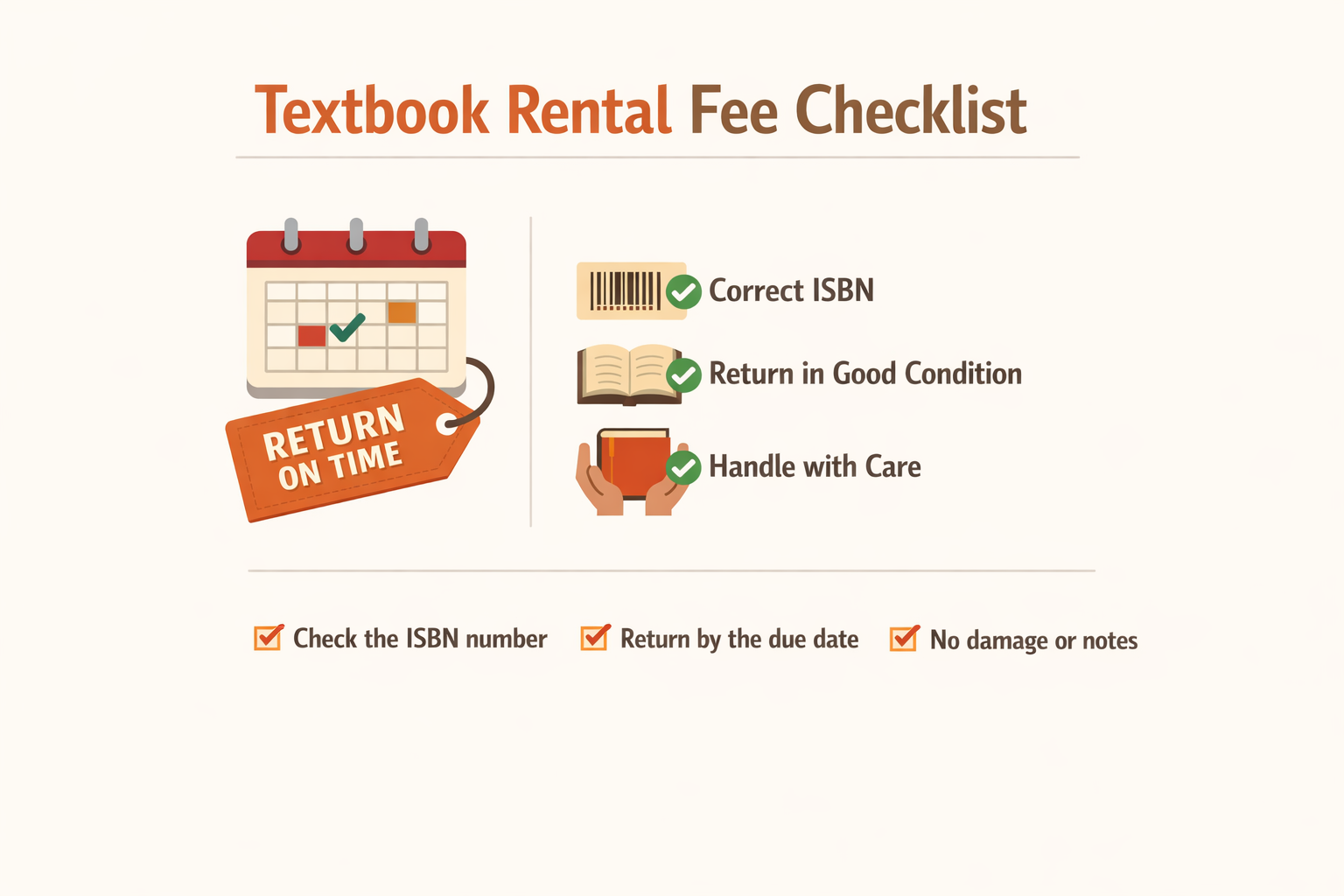
- Confirm the ISBN, title, author, and edition.
- Read the full condition note, not just the grade.
- Look for mention of highlighting, notes, water damage, stains, mold, or odors.
- Check whether the book includes supplements, access codes, CDs, or workbooks.
- Verify the return window and who pays return shipping.
- Compare the used price with new, rental, and other used options.
- If the book is for a hard STEM course, lean toward better condition.
- If the book is mostly for reading, Good or Acceptable may be enough.
A practical rule: if you would be annoyed to carry it around campus every day, do not buy the cheapest copy just because it is cheapest.
When to pay more—and when to walk away
Pay more when the textbook is central to the course, the class is technical, or you expect to keep the book for reference. Better condition usually means less frustration, fewer missing-page surprises, and a better resale shot later. It also makes sense to pay up when the seller’s photos are weak but the return policy is weak too.
Walk away when the listing mentions missing pages, obscured text, mold, liquid damage, or a likely wrong edition. Walk away if the book needs an access code and the seller cannot clearly confirm it is included. And walk away if the price difference between a worn copy and a cleaner copy is tiny; in that case, the extra few dollars are insurance.
The best used-textbook deal is not the grubbiest one. It is the copy that gets you through the semester with no drama.
If you want to compare used, new, and rental options quickly, search by ISBN on Textbook Nova and start with the copy that fits your class, your budget, and your tolerance for wear.