Three Short Novels Under 200 Pages for a Busy Reading Week
A short novel is a useful choice when you want to start a story without carrying it through a month of deadlines. But page count only gets you so far. A funny, uncomfortable account of working in a convenience store feels very different from a winter story about a difficult decision, even when both fit comfortably in a small bag. Start with the kind of company you want from a book, then check its length.
These three novels offer quite different evenings: the offbeat perspective of Convenience Store Woman, the gathering moral pressure of Small Things Like These, and the small island adventures of The Summer Book. Each has a verified English-language print edition under 200 pages. That makes them manageable choices for a busy week, without promising that everyone will finish them at the same speed—or that a short book must be emotionally light.
November also brings Novellas in November, a reading event running from November 1–30. You can use that as a nudge to pick one, but there's no need to turn these into a three-book assignment. One that suits your mood is a better starting point than a stack you feel obliged to finish.
Convenience Store Woman: for an offbeat voice and uncomfortable humor
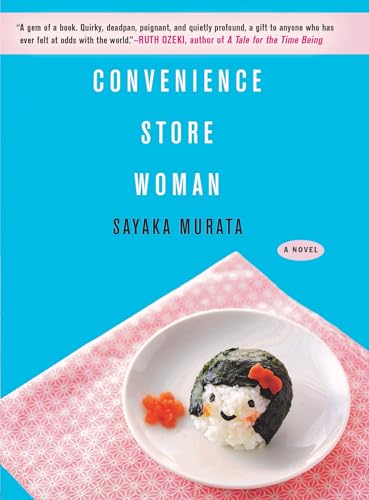
Convenience Store Woman by Sayaka Murata follows Keiko Furukura, who finds a reassuring set of rules in the convenience store where she works. At 36, she has spent eighteen years there. The routine that makes sense to her looks like a problem to the people around her, who expect a different job, a relationship, and a more recognizable version of adult life. Ginny Tapley Takemori translates the novel from Japanese.
The appeal is that gap between Keiko's satisfaction and everyone else's concern. Store procedures give her something clear to follow; outside work, the rules are harder to pin down. She observes other people's behavior and borrows ways of speaking and dressing. When a disaffected new coworker arrives, the arrangement becomes less stable. Grove's description establishes this as a story about conformity, with humor coming from the mismatch between Keiko's thinking and other people's assumptions.
Try this one if a distinctive narrator is usually what keeps you reading. A useful question to carry into it is whose idea of a successful life you're accepting in a scene. When someone offers Keiko advice, pause over whether the advice answers a need she has actually expressed. You don't have to agree with her to find that question interesting. It gives you something to follow beyond waiting for a big event or a conventional romantic resolution.
For a busy week, you might read until one interaction changes how you understand Keiko, then stop there. That is a more satisfying stopping point than meeting an arbitrary page target. If you mainly want landscape, companionship, and a softer pace, consider Jansson instead. The edition linked here is Grove's 2019 paperback, ISBN 9780802129628, listed at 192 pages; other editions have different counts.
Small Things Like These: for a concentrated moral dilemma
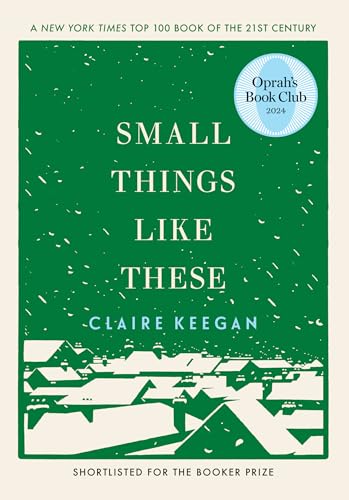
Small Things Like These by Claire Keegan takes place in an Irish town in 1985, during the weeks before Christmas. Bill Furlong is a coal merchant and a father, working through his busiest season. A delivery to the local convent leads to a discovery that makes it harder for him to continue with everyday life as before. His own past and his town's willingness to remain silent both matter to the decision ahead of him.
That premise, described by Grove Atlantic, gives the book a clear point of pressure. The question isn't simply whether Bill recognizes that something is wrong. It's what recognition will ask of him when he has a family, a livelihood, and a place in the community to consider. The Christmas setting belongs to that story; it isn't a promise of an uncomplicated seasonal comfort read. Choose it when you want a short book with a serious question at its center.
It could also be the strongest option here for reading alongside a friend. Before you begin, agree to leave the ending out of your messages until you're both finished. Then compare the moment when you felt Bill's position become difficult. Did practical responsibilities make his hesitation more understandable to you, or more frustrating? Those are questions you can discuss without turning the conversation into a test of who noticed the most details.
Although this is the shortest listed edition, give yourself room to read without hurrying. You could reserve a quiet stretch for it, or mark a pause and return when you can hold the central question in mind. If you're choosing primarily for dry humor, Murata is the better starting point. Grove's 2021 hardcover, ISBN 9780802158741, is 128 pages. Check that edition information if you're comparing it with a different printing or format.
The Summer Book: for island life, dry humor, and small adventures
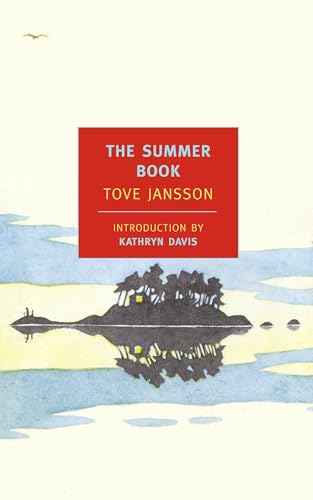
The Summer Book by Tove Jansson brings you to a small island in the Gulf of Finland with six-year-old Sophia and her grandmother. Thomas Teal translates it from Swedish. Its twenty-two vignettes make room for exploring, making things, talking, and disagreeing. Rather than building your reading around one urgent problem, you spend time with two people whose ages and temperaments give them different ways of seeing the same place.
The island is more than scenery. NYRB's description points to coastline walks, bark boats, and an imagined miniature Venice. Sophia's mother has died, and the publisher's reading-group guide explains how grief and the grandmother's aging sit beneath the adventures. That combination is useful to know before choosing it: the natural setting and humor coexist with loss. You needn't wait for summer to want that particular kind of company.
Of these three, its vignette structure offers the clearest places to pause between small sections. Try a vignette at a time if your week is fragmented. Before closing the book, notice one detail of the island and one thing the pair disagreed about. That small habit may help you return to their company without treating every reading session as an exercise in remembering plot. If you prefer a central decision pulling you toward an ending, Keegan may suit you better.
This is also a choice for readers who like a book to leave space around what its characters say. You can pay attention to how a conversation changes when you imagine it from the child's side, then the older person's. There is no need to choose a permanently wiser character. The NYRB Classics paperback, ISBN 9781590172681, has 184 pages. Its size is modest; you can still give individual scenes as much time as you like.
Pick your mood first, then check the edition
If you're choosing tonight, make the decision small. Pick Murata for a narrator whose idea of normal unsettles the people around her. Pick Keegan for a working man's difficult choice. Pick Jansson for the rhythm of an island summer and a prickly, affectionate relationship. You can change your mind after sampling the opening; the page count doesn't create an obligation to keep going.
Before buying or borrowing, compare the ISBN and format with the editions above. A hardcover, paperback, ebook display, or large-print edition can give a different number. The counts here describe specific books, not universal measures of difficulty or reading time. If your week allows only a few reading sessions, choose the experience you most want to return to. A short novel earns its place by making you want the next page, not by helping you clear a quota.